Why Every Student Should Do an Internship Before Graduating
The Student Internship Imperative
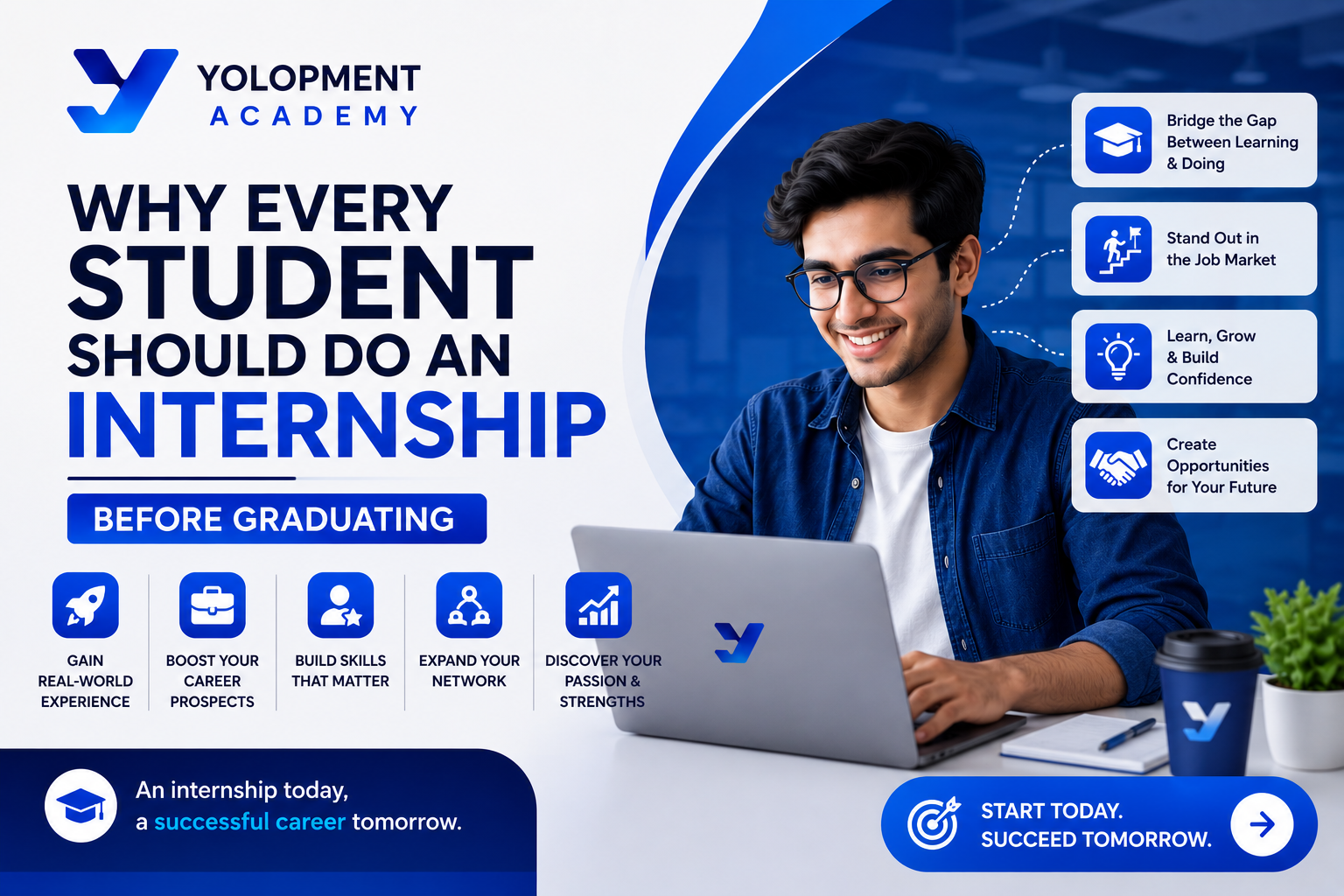
The job market has fundamentally changed. A decade ago, a degree was enough to secure employment. Today, employers expect much more — they look for practical skills, professional experience, and workplace readiness. This is exactly why every student should do an internship before graduating.
The Job Market Reality in 2026
According to industry surveys, over 80% of employers consider internship experience when screening resumes. Companies like TCS, Infosys, Wipro, and top startups consistently report that candidates with internship experience adapt faster, perform better, and reduce onboarding costs significantly.
10 Compelling Reasons Every Student Must Intern
1. Bridge the Theory-Practice Gap
Academic courses teach theories, frameworks, and conceptual knowledge. An internship translates those concepts into tangible skills by applying them to solve real business challenges.
2. Discover Your True Career Passion
Many students graduate and realize they do not enjoy their chosen field. An internship lets you test-drive a career before fully committing to it, saving years of misdirected effort.
3. Build Professional Networks Early
Your network is your net worth in the professional world. Internships help you meet mentors, senior professionals, and peers who can open doors throughout your career.
4. Develop Industry-Specific Tools and Skills
Whether it is Python for data science, React for web development, or Google Analytics for marketing — internships expose you to the specific tools and technologies employers actually use.
5. Strengthen Your Resume Before Campus Placements
During campus placements, having a completed internship on your resume gives you a decisive edge over thousands of other candidates. Recruiters immediately identify you as job-ready.
6. Earn a Certificate with Market Value
A certified internship from a recognized institute adds credibility to your profile and often carries more weight than a generic academic degree in technical fields.
7. Improve Your Communication and Workplace Skills
Emails, presentations, team meetings, client interactions — internships teach you the unwritten rules of professional communication that no classroom can simulate.
8. Gain Financial Independence
Paid internships provide stipends ranging from ₹3,000 to ₹25,000 per month, helping you develop financial responsibility while still a student.
9. Increase Placement Package Potential
Students with internship experience consistently receive higher initial salary offers. Employers justify premium packages for candidates who are already trained and experienced.
10. Potentially Secure a Pre-Placement Offer (PPO)
Outstanding interns often receive Pre-Placement Offers (PPO) from the same company — sometimes before even appearing for campus placements. This is the ultimate internship reward.
An internship is not an option anymore — it is the minimum requirement for a competitive career start in 2026.
What Happens If You Do Not Do an Internship?
Students who skip internships often find themselves:
- Struggling to clear competitive placement rounds due to lack of practical experience
- Accepting lower salary packages due to perceived inexperience
- Taking longer to adjust to workplace environments
- Losing confidence compared to peers who already have professional exposure
When Is the Best Time to Do an Internship?
The ideal time is during your 2nd or 3rd year of graduation. This gives you enough academic foundation to contribute meaningfully while still having time to apply your learnings in later semesters. Summer vacations are perfect for full-time internships, while part-time internships can run alongside your studies.
Conclusion
Every student, regardless of their stream or college tier, should prioritize doing at least one internship. It is the single most effective career investment you can make as a student. Yolopment Academy offers structured, certified internship programs across technology domains — giving you real project experience, industry mentorship, and a certificate that employers trust.